Critical Systems Monitoring for NH Businesses
24/7 Alerts for refrigeration, generators, server rooms, pump stations, and other equipment your operation cannot afford to lose. Early warning before a drift becomes a disaster.
Professional Monitoring Turns Alarms Into Action
Built for storms, outages, and off-hours.
Most equipment failures do not announce themselves. A walk-in freezer drifts two degrees above threshold overnight. A pump station runs dry on a Saturday. A server room loses cooling during a holiday weekend. By the time someone notices, the damage is already done.
Critical systems monitoring is how you find out before that happens.
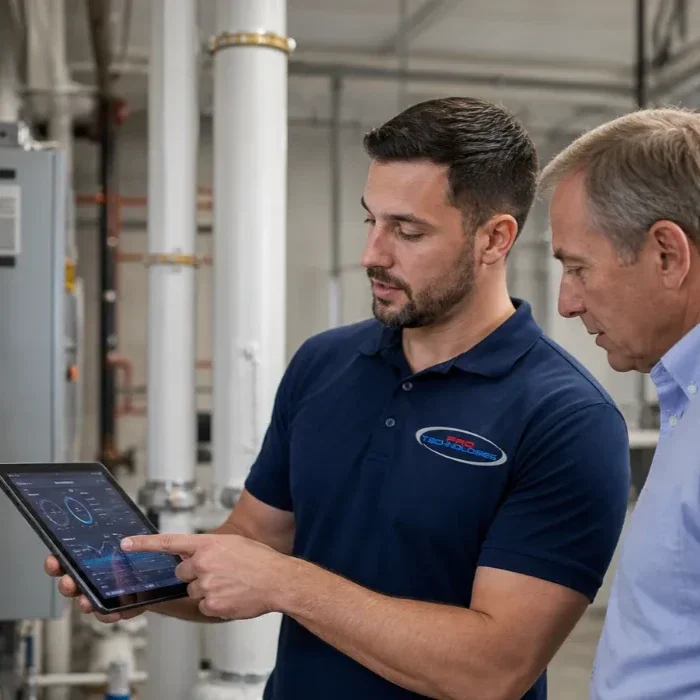
Pro Technologies installs sensor networks and monitoring logic for New Hampshire businesses, municipalities, and industrial operators who cannot afford undetected failures. We have been doing this work since 2005, monitoring asphalt storage silos, server rooms, municipal pump stations, and cold storage environments across the state. When something goes out of range, you get an alert — not a repair bill.
What Is Critical Systems Monitoring?
If it’s mission-critical, it should be monitored.
Critical systems monitoring is a professionally installed network of sensors connected to monitoring logic that watches the equipment and conditions your operation depends on. When a reading goes out of the range you define — temperature threshold, water intrusion, power failure, pressure drop, pump fault — an alert goes out immediately through whatever path you have configured.
The key distinction from a standard alarm system is that critical monitoring stays active regardless of whether your intrusion system is armed or disarmed. Your building can be full of staff and the monitoring is still running.
Why Businesses Use This
-
Reduce downtime & prevent loss
Catching a refrigeration issue at 11pm means a repair call, not a full inventory write-off. Early warning is the difference between a service event and a business interruption.
-
Protect inventory & regulated environments
Food service, medical storage, laboratories, and pharmaceutical environments often face regulatory requirements around temperature excursion documentation. Monitoring provides both the protection and the record.
-
Catch failures that don’t make noise
Freezers drift gradually, batteries weaken over weeks, pumps fail without warning. These are the failures that cost the most precisely because they are invisible until they are not.
What We Can Monitor
Every business is different, so we design systems around the equipment that would hurt you most if it stopped working.
Temperature & Cold
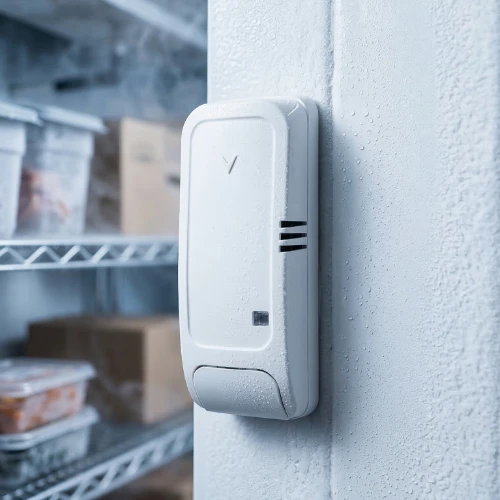
We configure high and low thresholds with adjustable delay windows so a brief door opening does not trigger an alert, but a sustained excursion does. Monitoring covers drift, rate of change, and absolute threshold violations.
- Walk-in coolers/freezers
- Server rooms & IT closets
- Labs & medical storage
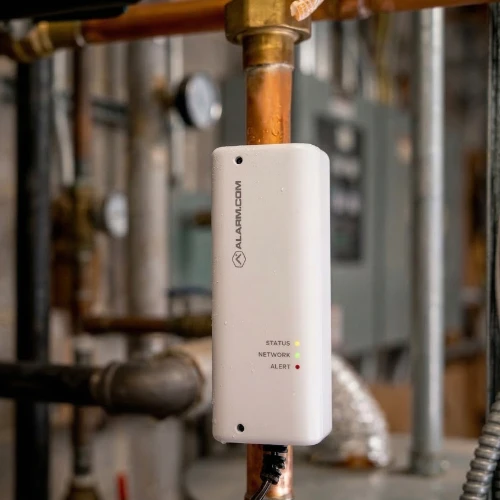
Water & Flood Risk
Sensors placed at floor level in mechanical rooms, server rooms, and utility areas detect water intrusion early, before it reaches equipment. Particularly valuable for basement-level infrastructure common in older New England commercial buildings.
- Mechanical rooms
- Server rooms
- Under sinks/utility areas
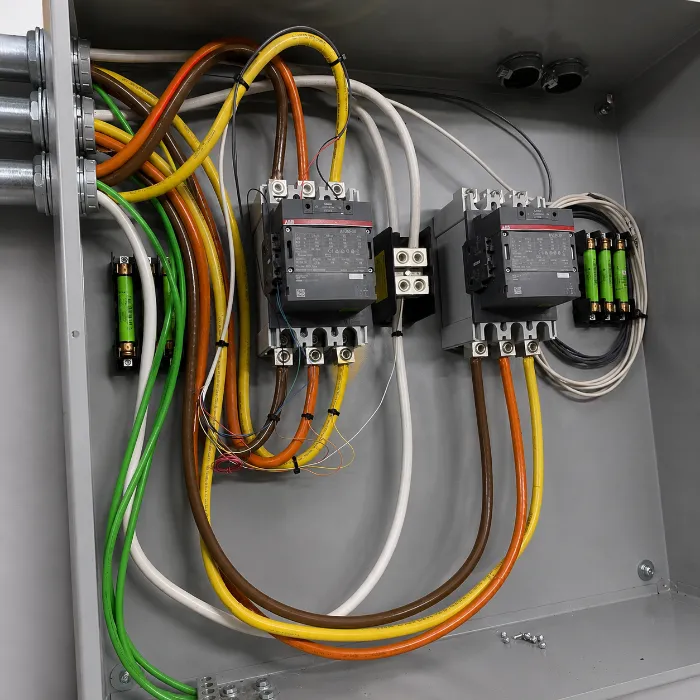
Backup Power
Generator fail-to-start monitoring confirms that backup power is ready before you need it, not after a utility outage reveals the problem. UPS monitoring tracks battery health and runtime estimates continuously.
- Generators (fail-to-start)
- UPS environments
- Critical panels
Pumps & Pressure
Pump fault detection covers failed starts, abnormal run times, and pressure drops that indicate blockage or mechanical failure. For municipal and property management applications, this is often the highest-consequence failure point on the monitoring list.
- Pump stations
- Compressed air
- Process environments
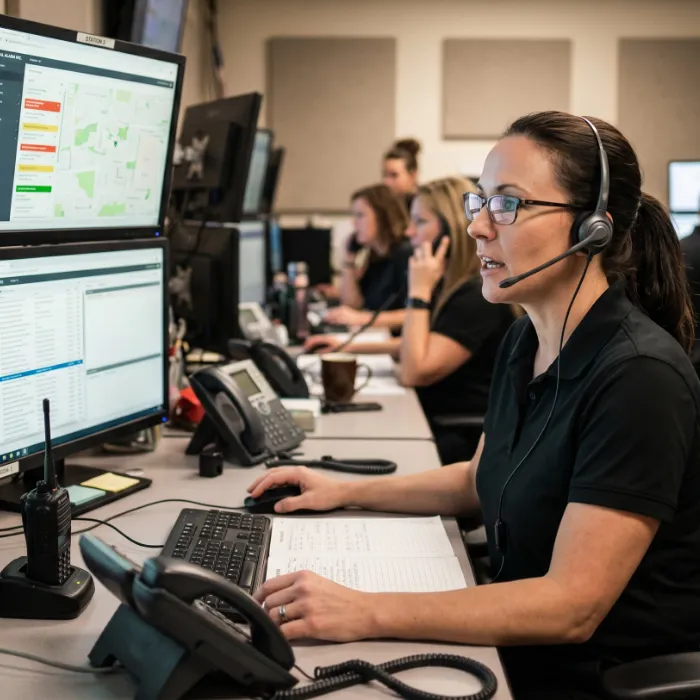
Central Station Monitoring
Some alarms can’t wait for a text.
Some alerts can be handled with a text message. Others cannot wait for someone to see their phone.
For equipment where a delayed response means significant loss — cold storage, pump stations, backup power systems, regulated environments — 24/7 central station monitoring adds a staffed response layer. When an alert triggers, trained operators receive it immediately, work through your call list until they reach a real person, and follow your escalation procedure.
This matters most for overnight operations, weekend failures, multi-site businesses where no one is monitoring a single phone, and regulated environments where documented response is part of compliance.
Immediate receipt of alarm and supervisory signals
Call list escalation until a real person is reached
Escalation procedures based on your defined protocols
Event logging for compliance and operational records
Real-World Examples
-
Restaurants — walk-in cooler and freezer monitoring
We monitor walk-ins for NH restaurants to catch refrigeration failures before product is lost. An overnight compressor failure can spoil thousands in inventory and trigger health code issues at the next inspection.
-
IT and server rooms — temperature and humidity monitoring
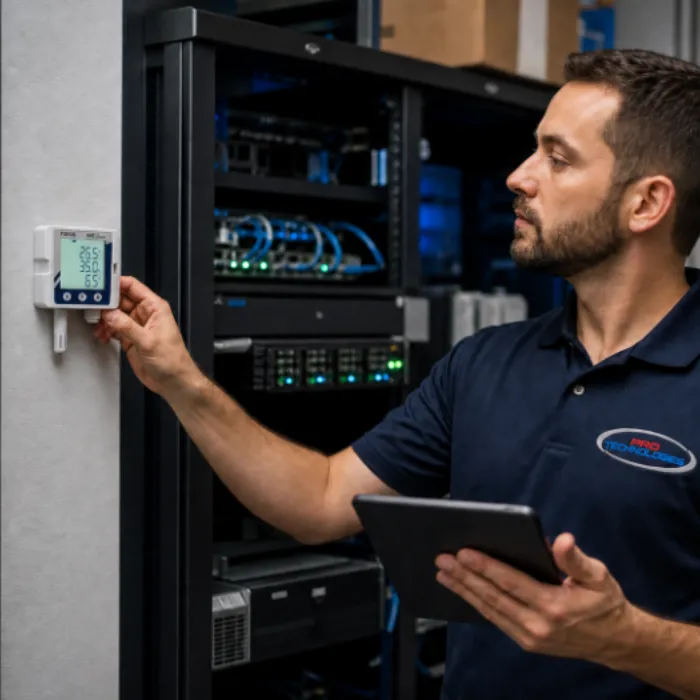
We monitor server rooms for NH businesses to prevent overheating and shutdown. For companies without 24/7 on-site IT staff, it's a simple way to protect infrastructure that costs far more to replace than to monitor.
-
Industrial — process and storage temperature monitoring
We monitor asphalt silos and similar industrial process equipment to prevent product solidification and equipment damage. A single undetected cooling event can cost tens of thousands.
-
Commercial facilities — power loss and generator monitoring
We monitor utility power and generator status for businesses where downtime isn't an option. Real-time alerts let facility managers act before a 2 a.m. power blip becomes a Monday morning catastrophe.
Critical Systems Monitoring FAQ
Customizable solutions for every entry point, room, and concern.
What types of equipment and systems can be monitored with critical systems monitoring?
Does critical systems monitoring work during a power outage or internet failure?
Can critical system alerts be sent to multiple people or an on-call rotation?
Does critical systems monitoring stay active when the security system is disarmed?
Do you offer 24/7 central station monitoring for critical systems?
How quickly will I receive an alert when a critical system goes out of range?
Can alert thresholds and delays be customized to reduce nuisance alarms?
Do you provide continuous data logging for compliance or audit purposes?
Can you monitor multiple business locations under one critical systems platform?
Do you help develop response plans for when a critical systems alert triggers?
Our Service Area
Proudly protecting New Hampshire neighbors
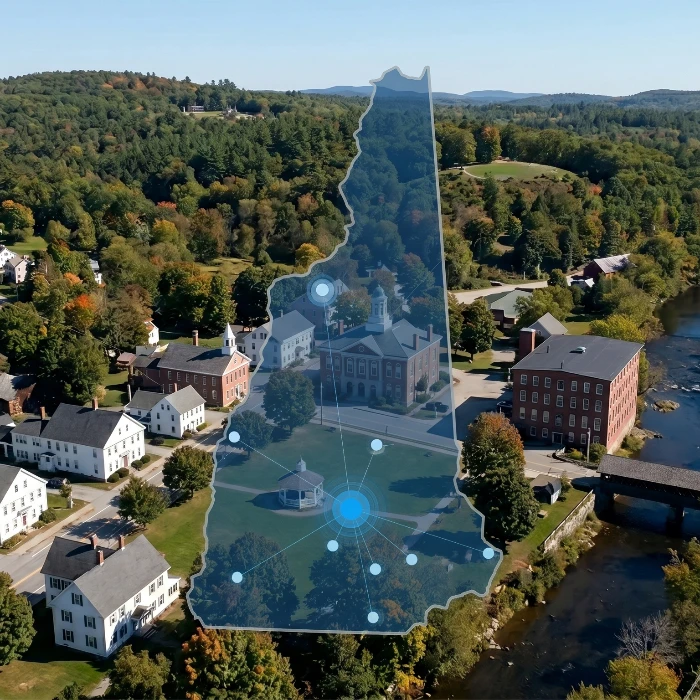
From our Hooksett headquarters, our technicians cover the entire Granite State plus border communities in Maine and Vermont. When you need us, we are not calling in from out of state. We are already close by.
- Manchester
- Concord
- Nashua
- Portsmouth
- Derry
- Laconia
- Bedford
- Keene